

Next-Generation Citizen Engagement: How Technology is Transforming Public Safety Relationships
Jeff Gottstein • 11/06/2025
Modern public safety is undergoing a fundamental transformation. As societal expectations evolve, public safety agencies are under increasing pressure to build more transparent, equitable, and effective relationships with the communities they serve. The concept of Next-Generation Citizen Engagement responds to this demand by harnessing the full potential of technology, secure communication, and mobile-first tools to elevate how agencies interact with citizens.
These innovations go beyond basic digital upgrades. They represent a shift toward real-time responsiveness, increased accountability, and citizen-centric design. Whether through mobile apps, alerts or interactive platforms, law enforcement can now foster engagement that feels immediate, personal, and trustworthy.
A 2023 study by the National Policing Institute found that departments using digital citizen engagement tools saw a 42% increase in community participation in public safety initiatives. This points to a growing demand for faster, more accessible interactions between residents and agencies.
Rethinking How Police Connect with Citizens
Historically, police departments relied on tools like community meetings, print newsletters, and door-to-door outreach. While valuable in the past, these methods struggle to engage today’s population, which increasingly consumes information through smartphones, apps, and social media.
The digital-first citizen expects instant access, customized updates, and on-demand support. To meet this expectation, departments are adopting platforms that enable two-way messaging, and allow residents to report incidents or ask questions without leaving their homes.
Case Study: Colorado PD’s Mobile App
Consider the example of a mid-sized police department in Colorado that phased out its printed community bulletin in favor of a multilingual mobile app. The app included push notifications, emergency alerts, and local event updates. Within six months, community survey participation rose by 213%, and the department saw a 30% drop in non-emergency 911 calls—citizens were using the app instead.
+213%
Increase in Survey Participation
-30%
Drop in Non-Emergency 911 Calls
Beyond efficiency, this transition represents a strategic shift in tone. Police are no longer just informing the public—they’re engaging with them, listening, and responding at the speed of digital life.
The Role of Technology in Building Community Relationships
Technology is not just a convenience—it is a bridge to build sustained trust. Secure and consistent communication allows law enforcement agencies to keep the public informed while also showing that they value feedback and participation.
Digital communication tools help agencies respond more effectively to community needs by enabling timely reporting, status updates, and direct interactions between citizens and officers. These platforms support two-way communication, giving residents a voice while helping law enforcement stay informed about on-the-ground issues.
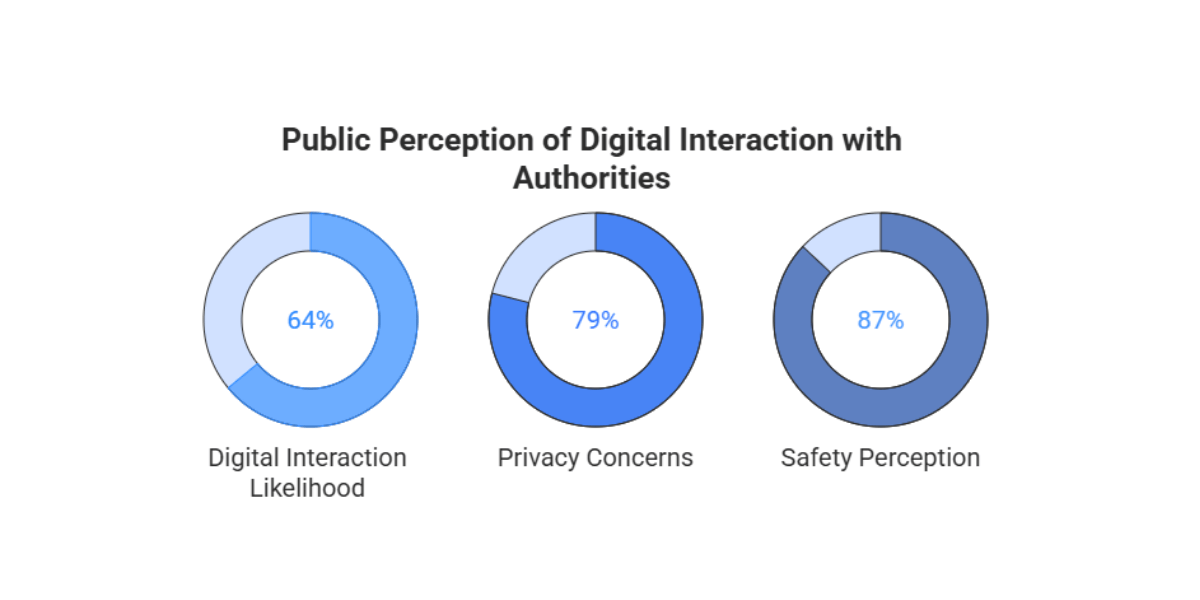
A study by the Center for Cybersecurity and Law Enforcement reports that 64% of citizens are more likely to interact with police digitally when they feel their input is handled responsibly and confidentially, especially in sensitive situations.
Real-World Application: Florida Hurricane Response
In a Florida county recently affected by a hurricane, a digital reporting platform allowed residents to submit photos of blocked roads, power outages, and missing persons directly to emergency operations centers. More than 4,000 verified reports were processed within 24 hours, helping prioritize rescue efforts and direct resources where they were most needed—while also protecting the identity and privacy of those submitting information.
These tools also offer valuable insights. Agencies can track response times, measure community sentiment, analyze participation trends, and continuously improve how they engage with the public—making communication more responsive, inclusive, and impactful.
Privacy, Trust, and Real-Time Communication
Despite the potential of next-gen engagement, privacy concerns remain a major obstacle. Citizens are rightfully cautious about how their data is collected, stored, and used. According to a 2022 Pew Research Center survey, 79% of Americans worry about how law enforcement and government agencies handle their digital information.
To counter this, agencies must commit to clear privacy protocols. These should be easy to access and written in plain language. Hosting regular privacy Q&A sessions and establishing citizen advisory boards are effective strategies for transparency and oversight.
Example: Texas PD’s Privacy-First Approach
A leading example comes from a metropolitan police department in Texas, which introduced an opt-in mobile alert system. Before launch, they distributed a one-page privacy summary explaining:
- What data is collected?
- How it’s encrypted and stored,
- And who has access (with citizen oversight).
After implementation, opt-in rates grew from 12% to 61% in under four months, largely due to trust-building communication efforts.
Transparency isn’t a one-time event—it’s a continual practice. Agencies that make privacy part of their everyday conversation are more likely to earn public trust in the long term.
Bridging the Gap Between Officers and the Public
One of the most delicate aspects of citizen engagement lies in in-person interactions, especially those involving law enforcement stops or identity checks. These moments can be stressful, misunderstood, or even confrontational—especially when communication or identification processes are slow or unclear.
Mobile identity verification tools can transform these encounters. Instead of relying on physical documents—which can be lost, forged, or difficult to verify—officers can use secure apps that validate a citizen’s ID in seconds. This reduces unnecessary tension and shortens interactions, creating a safer, more respectful experience for everyone involved.
The benefits extend far beyond efficiency:
Speed
Verification times drop from several minutes to under 30 seconds.
Accuracy
Digital tools reduce the chance of human error or data entry mistakes.
Equity
Citizens are treated consistently, regardless of language barriers or documentation style.
A pilot program in a New Jersey suburb reported that since implementing mobile ID tools, complaints during traffic stops dropped by 47%. Officers also reported feeling less exposed during nighttime stops, as mobile ID systems eliminated the need to request physical documents in potentially hazardous conditions.
In addition, mobile engagement events such as live-streamed Q&A sessions, “Ask Me Anything” Instagram takeovers with community liaison officers, or digital open houses allow departments to humanize officers and make them more approachable, even in communities with historic distrust.
How Mobile Tools Modernize Policing
Today’s public safety professionals must balance rapid response, citizen transparency, and data management—all often in real time. Mobile tools not only enhance officer efficiency but redefine how communities interact with law enforcement.
Key capabilities now accessible through smartphones and tablets include:
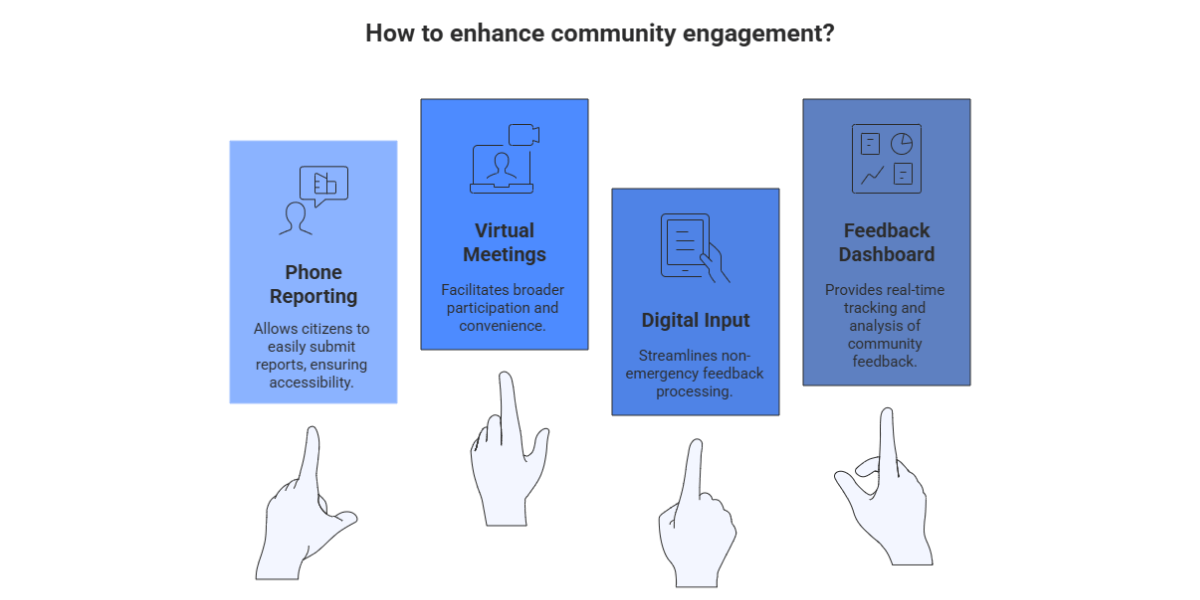
- Submitting crime tips or suspicious activity anonymously.
- Reporting noise complaints, vandalism, or other non-emergencies.
- Accessing public safety dashboards with real-time neighborhood data.
- Receiving emergency alerts.
A department in Oregon deployed a mobile platform that could send weather alerts, traffic disruptions, and evacuation notices. Residents within the affected zones received push notifications instantly. Surveys later revealed that 87% of users felt better informed and safer, and emergency response times improved by 18% due to faster civilian feedback.
For officers, the same tools offer on-the-go access to case history, live camera feeds and internal dispatch updates—all without returning to headquarters. The IACP (International Association of Chiefs of Police) estimates that agencies using full mobile integration save an average of 6 hours per officer per week, which can be redirected to patrol, community engagement, or investigation.
Mobile tools are no longer a luxury—they are operational necessities in a landscape where both citizens and law enforcement expect speed, accuracy, and accountability.
Documented Case Studies of Next-Generation Citizen Engagement
The theoretical benefits of next-generation engagement are well documented—but what happens when these tools are implemented in real-world environments?
Here are five concrete examples of how technology, when applied thoughtfully, has supported community-police engagement:
1. New York City
Officers assigned to specific neighborhoods have leveraged digital tools such as mobile surveys and communication platforms to better understand and respond to local concerns. In precincts where this approach was adopted, crime complaints decreased by 17%, and citizen satisfaction rose significantly.
2. Los Angeles
Long-term relationship-building strategies in high-need communities have been supported by virtual town halls and mobile alert systems. These tools have made law enforcement more accessible, resulting in a 21% increase in incident reporting and stronger indicators of community trust.
3. Seattle
Real-time alert systems, interactive crime maps, and direct precinct communication tools have simplified how residents interact with their local officers. Following implementation, there was a 45% improvement in response to non-emergency reports and a reduction in duplicate submissions.
4. Chicago
A centralized online portal has allowed residents to submit reports, track updates, and request public records remotely. With over 100,000 monthly users, the platform has reduced in-person visits by 60%, allowing more resources to be allocated to fieldwork and community presence.
5. London
A pilot initiative for mobile identity verification during stop-and-search procedures helped reduce encounter time by 50%. Public feedback also showed a marked improvement in perceptions of fairness and professionalism during interactions.
These examples confirm what digital transformation advocates have long believed: When implemented transparently and ethically, technology strengthens the very foundation of public safety—trust.
These examples confirm what digital transformation advocates have long believed: Technology, when implemented transparently and ethically, strengthens the very foundation of public safety—trust.
Final Thoughts
Next-Generation Citizen Engagement is not just a trend—it’s a new standard. Agencies that proactively embrace secure, mobile-first, and transparent communication tools are positioning themselves as community partners, not just enforcement bodies.
Key takeaways for departments looking to modernize:
1
Build trust first. Start by explaining how citizen data will be protected. Make privacy policies accessible, readable, and enforceable.
2
Meet citizens where they are. If your community is mobile-first, your outreach strategy should be too.
3
Promote dialogue, not just broadcasting. Engagement must be a two-way street—enable feedback, host live discussions, and use analytics to respond meaningfully.
Looking ahead, agencies that combine technology, accountability, and empathy will be best equipped to navigate the evolving landscape of public safety. They’ll not only reduce crime and improve response—they’ll earn something far more valuable: the enduring trust of their communities.
Ready to Engage Smarter?
Guardian4D equips public safety departments with cutting-edge tools for secure messaging, citizen identity verification, mobile-first alerts, and real-time engagement.
Empower your agency to build stronger, safer, and more transparent relationships with the communities you serve.