
Incident Storyboarding
Jeff Gottstein • 11/06/2025
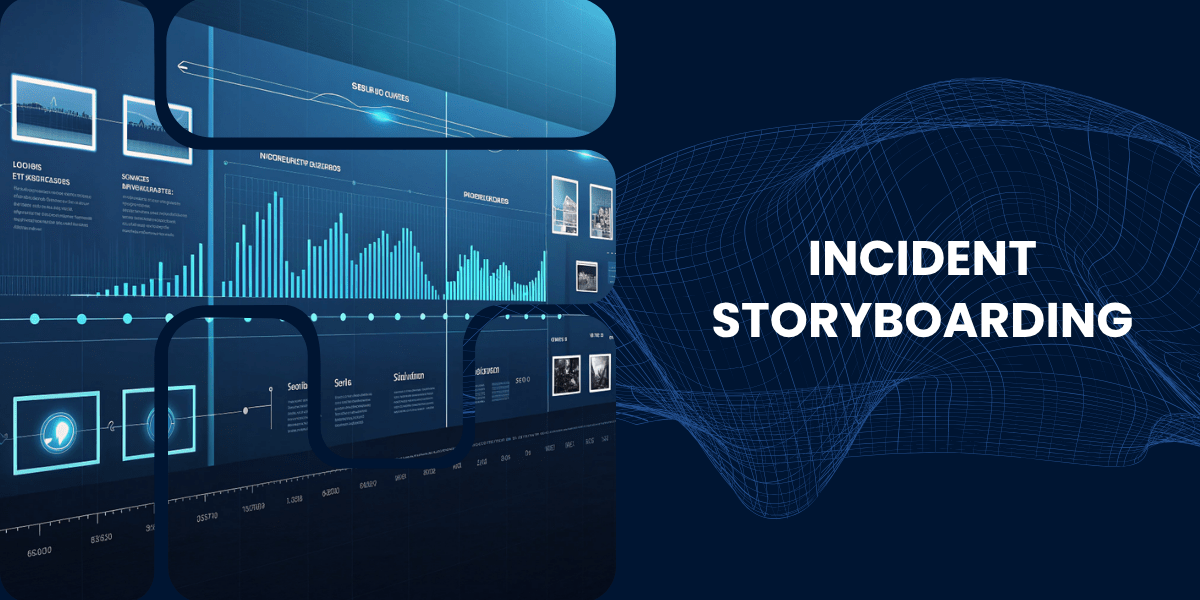
Incident Storyboarding: Organizing Incident Media in One Place
Incident storyboarding is a powerful tool designed to visually organize evolving and intricate incident media into a comprehensible and practical format for thorough review and analysis. This innovative approach takes disparate pieces of digital evidence, such as bodycam videos, images, documents, and 911 calls, and arranges them chronologically on a spatial-temporal timeline. Its primary purpose is to provide essential clarity for investigators, legal proceedings, and training initiatives, enabling stakeholders to view and analyze incidents with all dimensions fully represented. Importantly, it functions as a critical resource for post-incident review and training, supporting a deeper understanding of events without serving as a primary storage or evidence custody system.
Case Example:
For instance, in a sensitive suicide-by-cop case, storyboarding allowed for a clear sequence of events to be established, from the initial 911 call to the officer’s perspective, proving invaluable for impactful training. This capability exemplifies the power of a police incident storyboard in bringing critical details into sharp focus, fostering a more complete narrative.
How Bodycam Footage Fits Into the Bigger Picture
Bodycam footage, while undeniably a primary evidence source in modern law enforcement, gains immense context and clarity when integrated within a broader incident storyboard. Isolated clips, despite their immediacy, often lack the surrounding details necessary for a complete understanding of an event. Storyboards are thoughtfully designed to effectively integrate this important footage with other vital documentation to present a comprehensive, multi-perspective review.
Officer Notes
Witness Statements
Audio Recordings
This holistic view helps to bridge the gap in understanding, ensuring that every piece of evidence contributes to a cohesive narrative. Such seamless bodycam video integration can transform raw data into actionable insights, promoting transparency and building trust within the community.
Aligning Reports, Videos, and Files Chronologically
Aligning various media types chronologically creates a reliable and continuous narrative essential for thorough investigations and legal proceedings. This process emphasizes precise timestamp alignment and continuity across different data formats, ensuring that every event is placed in its proper sequence. Agencies can sync body cams, 911 calls, and other related videos to reveal all available perspectives, significantly enhancing overall situational awareness and coordinated responses. Such accurate sequencing is vital not only for internal reviews and operational debriefs but also for meeting stringent legal standards and enhancing accountability within public safety operations.
Advanced Functionality: In addition, the system is designed to enable advanced keyword search functionality, allowing investigators to quickly flag every mention of specific terms, such as “suspect” or “weapon,” throughout the aggregated media.

Reducing Review Time with Visual Evidence Mapping
Visual evidence mapping through storyboarding significantly streamlines case review workflows by centralizing and organizing disparate media files. This methodology proactively addresses common pain points in investigations, such as scattered files, disorganized folders, and the time-intensive process of searching through unindexed or fragmented data.
| Common Pain Points | Storyboard Solution |
|---|---|
| Scattered files & disorganized folders | A visually mapped timeline allows for rapid situational assessment. |
| Searching unindexed or fragmented data | Quickly grasp event sequences, identify key moments, and pinpoint critical junctures. |
A visually mapped timeline allows for rapid situational assessment, enabling investigators to quickly grasp the sequence of events, identify key moments, and pinpoint critical junctures.
For instance, in analyzing complex incidents, Gartner research highlights that 90% of all buyers reported revisiting, or looping back, to at least one job as part of their overall purchasing process, illustrating the non-linear nature of complex information gathering and decision-making, and underscoring the value of tools that simplify and clarify such intricate journeys.
The Incident Storyboard is intended specifically for training and post-incident review, highlighting its value as a sophisticated multi-media evidence platform that can provide clarity where complexity often reigns.
Getting Started with Storyboarding Software
Agencies embarking on incident storyboarding can look for software features that facilitate easy media organization and integration within a broader digital evidence framework. Key features to consider include:
Intuitive Timeline Builders
Intuitive drag-and-drop timeline builders.
Robust Metadata Syncing
Robust metadata syncing capabilities.
Secure Cloud Access
Secure cloud access for flexibility, designed to be simple and powerful.
These functionalities are intended to simplify the complex task of evidence management and support timely, secure sharing of information. Incident Storyboard can export summaries with titles and key clips, and is designed to potentially link with Incident Transparency, providing a centralized public portal for official communication during high-profile incidents, reducing social media “noise”. Incident Storyboard is designed to integrate with broader digital evidence workflows, further enhancing an agency’s efficiency and effectiveness.
For more tactical implementation strategies, exploring How to Build a Digital Evidence Timeline that Holds Up in Court can provide additional guidance and best practices.
Conclusion
Guardian4D is dedicated to empowering public safety through innovative solutions that enhance visibility and connectivity. Our core vision is to bridge the gap between citizens and law enforcement while creating transparency that leads to trust in both directions. Incident storyboarding, as an integral part of this comprehensive approach, provides a powerful means for agencies to meticulously organize and review incident media, fostering greater clarity in their operations. This commitment to objective, verifiable information transforms communication between citizens and law enforcement into a process that is verifiably transparent. As an organization, Guardian4D aims to become the leading provider of innovative software solutions for the public sector, focusing on empowering agencies with cloud-based technology designed to improve outcomes for citizens.
Want to see how Guardian4D’s platform streamlines your digital evidence workflow? Learn how incident storyboarding can reduce review time and strengthen your legal outcomes.