

How to Launch a Police Transparency Portal Without Overloading IT
Jeff Gottstein • 06/11/2025

Law enforcement agencies today face a significant challenge: the imperative to publish digital evidence and engage the public transparently often clashes with limited internal IT resources. Public trust is paramount, and without efficient communication, communities can struggle to understand critical events. This article will examine the strategic and tactical steps for launching a police transparency portal quickly and efficiently, without requiring IT staff involvement or extensive technical deployments. By focusing on the right tools and approaches, agencies can begin Building Public Trust with Transparent Policing and streamline their public communication, ultimately supported by solutions for Secure and Compliant Video Publishing for Law Enforcement Transparency.
The Case for Transparency Portals
Police transparency portals are essential in modern policing because public expectations and legal precedents are increasingly shifting towards greater openness. In a digitally connected world, citizens expect immediate, accessible, and verified information, particularly during high-profile incidents.
A dedicated online platform provides a single trusted portal for citizens to access official information, helping to prevent the spread of misinformation and fostering trust within the community. For instance, Guardian4D’s mission is built on creating secure, verified trust between the public and law enforcement. This shift from reactive, scattered communication to proactive, centralized information sharing is essential for modern community relations.
Why Small Agencies Struggle with Tech Deployments
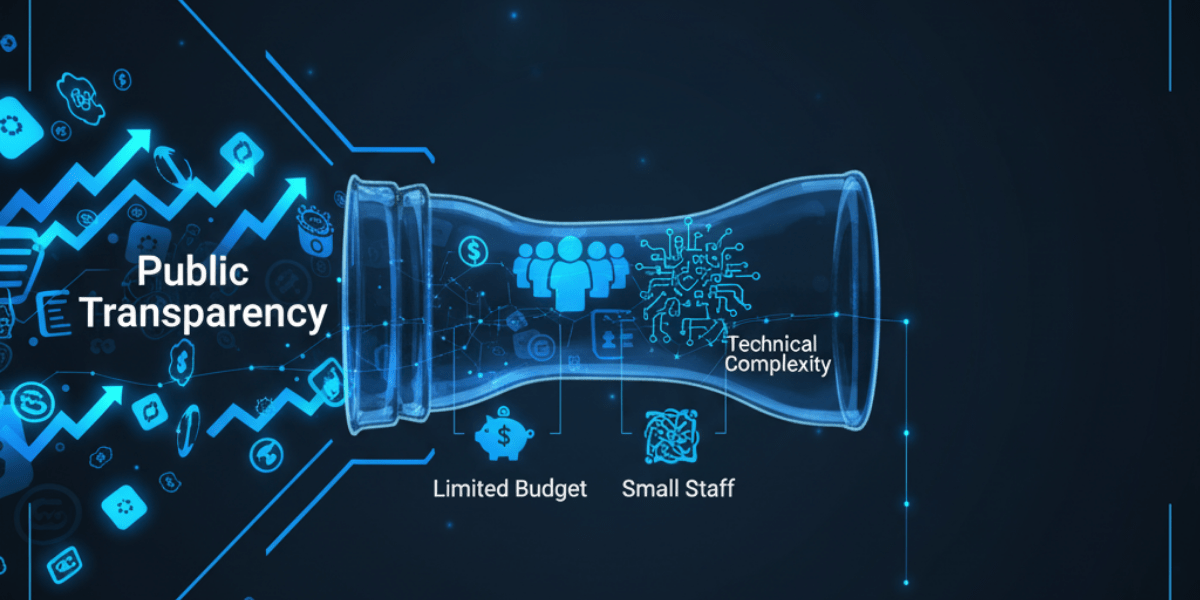
Small and mid-size agencies often struggle with new technology deployments due to significant constraints such as limited budgets, small staff sizes, and a fear of technical complexity. Many smaller departments simply lack dedicated IT personnel, let alone specialized developers who can manage intricate software integrations.
Financial constraints prevent investment in costly new technologies and the staff to manage them.
Existing personnel are often overstretched, with no capacity to take on complex IT projects.
Fear of intricate integrations and maintenance requirements creates a barrier to adoption.
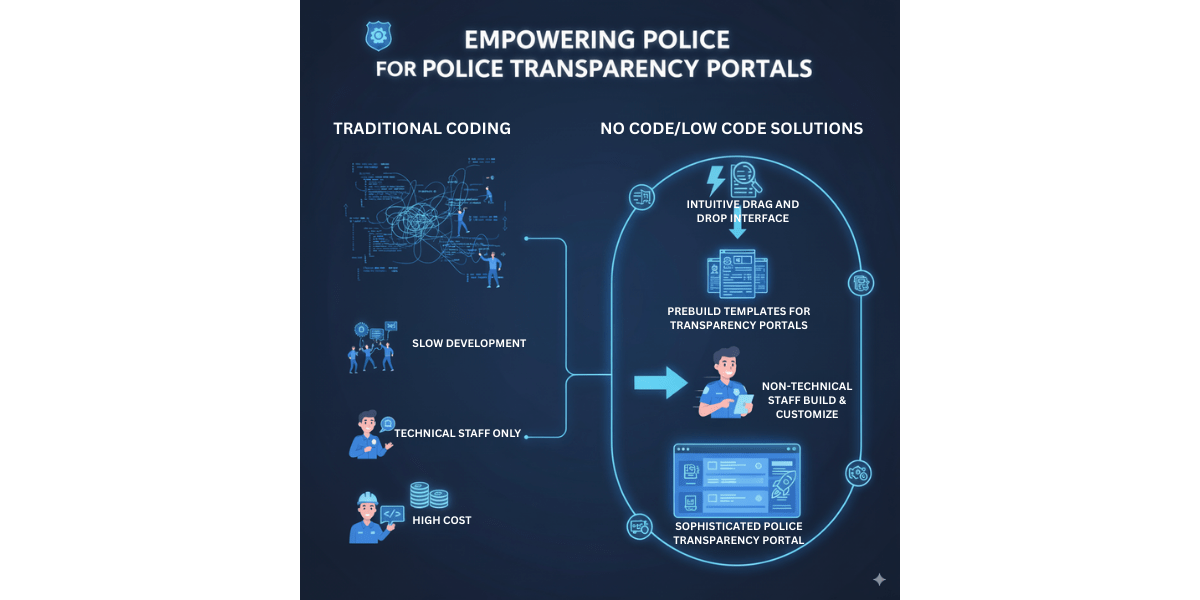
The solution isn’t eliminating the need for staff altogether, but rather eliminating the need for technical staff while empowering communication teams to manage transparency directly.
This creates a substantial bottleneck, delaying the launch of important transparency initiatives even when the need is evident. The challenge is so pervasive that 91% of web pages and blogs, including those intended for public information, get no traffic at all, often due to inefficient strategies and deployment hurdles.
Centralized law enforcement transparency software is specifically designed to simplify deployment, offering a solution that does not require extensive IT staff to manage.
Ready-to-Deploy Solutions for Fast Launch
Ready-to-deploy solutions offer a rapid path to launching a police transparency portal, removing the need for IT involvement in setup and maintenance. These platforms provide pre-configured, agency-branded websites that can be launched almost immediately without requiring technical expertise from your staff.
| Feature | Benefit for Agencies |
|---|---|
| Instant Deployment | Pre-configured, agency-branded websites launch almost immediately, bypassing IT bottlenecks. |
| No Technical Expertise Required | Command staff can manage content directly without needing coding or development skills. |
| Built-in Security & Compliance | Platforms adhere to necessary standards out-of-the-box, ensuring secure and compliant public communication. |
Such solutions come with built-in security and compliance features, ensuring that published information adheres to necessary standards without requiring in-house development. Guardian4D’s solutions, for example, are designed for fast, nearly immediate deployment, with the platform handling all technical aspects while allowing command staff to manage content directly. This approach eliminates IT bottlenecks and accelerates time-to-value for agencies.
Content Types You Should Publish First
To achieve quick wins and demonstrate a commitment to openness, agencies should prioritize publishing the following content on their police transparency portal. These types of content directly address common public inquiries and can quickly build a foundation of trust.
Incident Videos & Body Camera Footage: Provide direct, unfiltered views of events to ensure clarity and accuracy.
Official Press Releases: Serve as the authoritative source of information, countering misinformation.
It is also important to emphasize robust metadata tagging, which enhances searchability and accessibility for citizens seeking specific information. Additionally, ensuring all published content follows your agency’s communication standards and transparency policies is paramount for maintaining integrity. Incident Transparency, a secure, easy-to-use, agency-branded website, is designed to upload and publish needed digital media for public viewing, providing a clear example of how these content types can be managed effectively.
Maintaining a Portal Without Dedicated IT Staff
Maintaining a transparency portal without dedicated IT staff is achievable through ready-to-use platforms that handle technical complexities while still requiring dedicated content staff to manage communications.
Managed Platform Responsibilities
By utilizing a managed platform, agencies can effectively offload system updates, security patches, and other technical upkeep to the provider. This allows command staff, rather than IT, to update and manage the portal, ensuring long-term sustainability for departments of any size.
Agency Staff Responsibilities
While the platform eliminates IT involvement, agencies still need dedicated staff to create content, respond to public inquiries, monitor community engagement, and manage ongoing communications. The key difference is that these staff members don’t need technical expertise—they focus on communication and community engagement while the platform handles all technical aspects.
Analytics features, which monitor clicks, views, and time spent on incidents, further empower agencies to understand what content resonates with the public and to adjust their approach as needed.
Final Thoughts
A police transparency portal offers a direct path to Building Public Trust with Transparent Policing without overwhelming IT resources. Agencies can efficiently achieve this key goal through accessible, Secure, and Compliant Video Publishing for Law Enforcement Transparency solutions.
Looking to launch your own police transparency portal without waiting for IT to catch up? Guardian4D offers secure, no-code video publishing and compliance-ready solutions for agencies of every size. Discover how Guardian4D supports public safety agencies with verification-first tools, transparency features, and secure digital engagement that strengthen trust.
Book a demo today to see how you can build public trust—faster.