

Secure and Compliant Video Publishing for Law Enforcement Transparency
Jeff Gottstein • 06/11/2025
What is secure and compliant video publishing for law enforcement transparency?
Secure and Compliant Video Publishing for Law Enforcement Transparency refers to the controlled release of official video evidence in a way that protects sensitive information while giving the public access to trusted information. It ensures that videos are published through verified channels that safeguard privacy, meet regulatory requirements, and reinforce accountability.
Communities today expect near-instant access to verified information, especially when video evidence is involved. Social media amplifies unverified clips within minutes, creating confusion and fueling speculation. Secure publishing gives agencies a proactive way to provide clarity, ensuring that official footage reaches the public through trusted channels before rumors take hold.
In addition to meeting public expectations, secure publishing also protects agencies from the operational risks of ad-hoc releases. Without a defined process, staff may struggle to prepare footage quickly, leading to delays or accidental disclosure of sensitive information. Establishing a compliant workflow ensures that every release is timely, consistent, and defensible.
Beyond compliance, secure publishing also represents a cultural shift within public safety. Agencies are moving from a defensive posture—responding only when pressured—to a proactive posture where transparency is built into daily operations. This proactive stance reassures communities that their safety partners are committed to openness even before questions are raised.
Why are police transparency portal mandates driving change?
Police transparency portal mandates require agencies to make critical information available to the public in a structured, accessible way. These mandates push agencies to move beyond ad-hoc video releases and toward standardized systems that reduce misinformation.
When agencies adopt dedicated portals, they:
Across the United States, transparency laws continue to evolve. Some states require agencies to publish bodycam or dashcam footage within a defined period after a critical incident, while others mandate online portals for public access.
These requirements are reshaping how agencies approach incident communication, pushing them toward standardized processes that reduce delays and promote consistency across departments.
These mandates also help level the playing field between large urban departments with dedicated communications teams and smaller agencies with limited resources. By relying on standardized portals, both can provide the same level of transparency, regardless of size or budget, ensuring equity in how information reaches the public.
Another impact of police transparency portal mandates is the creation of more consistent expectations across jurisdictions. When the public knows that official video will always be available in a designated location, it reduces confusion and helps set a clear standard of accountability. This uniformity is especially important in regions where multiple agencies collaborate during emergencies or joint operations.
These mandates also encourage technology vendors to improve their offerings. As agencies adopt portals, providers are pressed to meet higher security, accessibility, and compliance standards. This healthy pressure drives innovation and ensures that departments benefit from solutions designed to evolve alongside regulatory requirements.
How does public incident video publishing improve accountability?
Public incident video publishing helps communities see official perspectives rather than relying on unverified third-party posts. By centralizing video releases, agencies strengthen trust and reduce speculation.
The key is providing official context and perspective rather than raw evidence files. This approach allows agencies to explain what happened, provide relevant context, and demonstrate accountability without compromising sensitive details or ongoing investigations.
Without structured publishing, agencies risk releasing information piecemeal, often in response to external pressure. This reactive approach can erode public trust and create inconsistencies in how cases are perceived.
By contrast, when video is released through a secure portal with clear context and redactions where needed, agencies demonstrate both accountability and professionalism, reducing tension in high-stakes situations.
A structured publishing process also improves internal communication. When officers know that video evidence will be reviewed, redacted, and released through a consistent system, it reduces uncertainty and reinforces confidence that the agency is handling sensitive material responsibly. This predictability strengthens both internal morale and external trust.
Another benefit of public incident video publishing is improved education for the community. By attaching explanatory notes, timelines, or training context to videos, agencies transform raw footage into meaningful communication. This helps the public understand not only what happened but also how officers are trained to respond in high-pressure situations.
For example, a portal release might include a bodycam clip along with a brief explanation of departmental policy on de-escalation. This combination of visual evidence and context helps bridge the gap between law enforcement protocols and community expectations, fostering a more informed dialogue.
What are secure incident information processes and why does it matter?
Secure incident information publishing ensures that agencies can share official incident details and context with the public through verified channels while maintaining internal security protocols for sensitive materials.
Secure publishing matters because it:
This separation allows agencies to be transparent about incidents while preserving the integrity of their investigative processes.
What features should a secure video publishing system include?
Agencies should look for features that combine compliance with ease of use. A robust system includes:
These capabilities reduce risk while improving efficiency in how agencies share information. A secure system should not only manage files but also provide intuitive workflows.
For example, redaction tools must allow reviewers to quickly blur bystanders or sensitive data without delaying the release.
Audit trails should be accessible in a clear format that internal affairs teams or oversight boards can review with confidence.
These features make publishing defensible, efficient, and aligned with best practices in accountability.
Guardian4D addresses these needs through Incident Transparency and Incident Storyboard, which help agencies centralize their publishing process.
Guardian4D focuses on incident transparency and organized presentation rather than evidence redaction or chain of custody management.
The platform helps agencies present official incident information clearly while working alongside existing evidence management systems that handle sensitive materials.
Rather than replacing evidence management systems, these tools focus on review, synchronization, and communication, ensuring that official information is accurate, consistent, and accessible to both leadership and the public.
Additional Key Features
Another critical feature is scalability. As video volumes grow, agencies need systems that can handle increasing demand without compromising performance. Whether managing dozens or thousands of files, a secure publishing system should adapt to the agency’s workload, ensuring that transparency remains sustainable over time.
Accessibility is another essential feature. A secure system must provide public-facing interfaces that are mobile-friendly and easy to navigate. Communities increasingly expect to access information from phones or tablets, and if portals are difficult to use, trust can erode quickly. By investing in user-centered design, agencies ensure that transparency is not only available but also convenient.
Analytics should also be built in. Tracking views, downloads, and community engagement gives agencies valuable insights into how their transparency efforts are received. This feedback loop allows leadership to refine their publishing strategies and improve communication over time.
How can agencies balance transparency with security?
Balancing openness with security means sharing appropriate incident context while protecting sensitive operational details. Agencies achieve this by:
Presenting official incident information through verified channels.
Publishing through official portals that track access.
Providing context alongside videos, such as summaries or timelines.
The challenge is not whether to release the video but how to release it responsibly. Agencies must weigh the urgency of informing the public against the duty to protect privacy, evidence integrity, and officer safety. Establishing a clear internal review process ensures that transparency never comes at the expense of fairness or compliance.
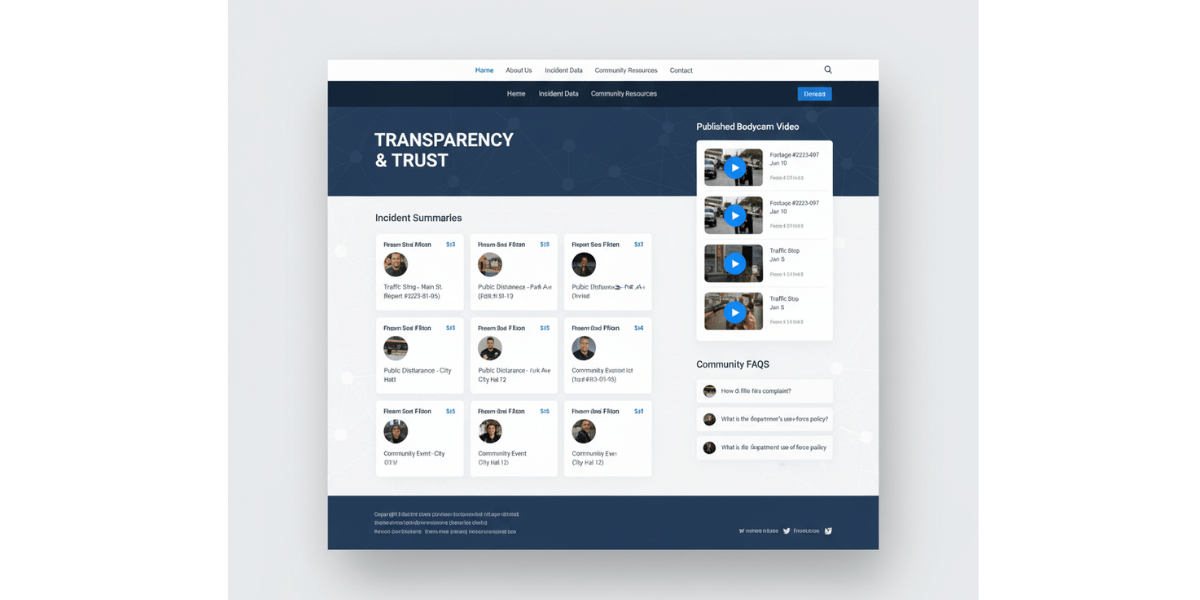
Agencies can also strengthen transparency by pairing published videos with educational resources. Providing FAQs, policy references, or training material alongside video content helps the community understand not only what happened but why certain protocols were followed, reducing misinterpretation.
Balancing transparency with security also involves timing. Releasing video too early, before proper redaction or context is prepared, risks exposing sensitive details. Waiting too long, however, can fuel suspicion. Agencies that succeed in this balance establish clear timelines for review and release, ensuring that footage is shared promptly but responsibly.
Another strategy is tiered access. Some content can be made available immediately to the general public, while more sensitive material may be shared only with oversight boards or legal teams. This layered approach ensures that transparency is meaningful without putting vulnerable individuals or ongoing investigations at risk.
This approach ensures that transparency does not compromise investigations or individual privacy.
What are best practices for law enforcement video publishing?
Best practices for agencies adopting secure publishing include:
Establish clear policies that define when and how videos are released.
Train staff on both compliance and communication.
Use integrated systems that combine storage, review, and publishing in one workflow.
Regularly review and update processes as mandates evolve.
Agencies that succeed with secure publishing often begin with pilot programs, testing workflows on smaller cases before applying them to high-profile incidents. This phased approach allows staff to refine processes and build confidence in the system.
Regular audits and stakeholder feedback also play a key role. By inviting input from community representatives, legal advisors, and technology partners, agencies can ensure that their publishing practices evolve alongside community expectations and regulatory standards.
Another best practice is scenario planning. By preparing responses for different types of incidents—such as vehicle pursuits, use-of-force encounters, or large-scale emergencies—agencies can accelerate their publishing timelines. Having predefined workflows for each scenario ensures that footage is released quickly while still respecting security and compliance requirements.
Training is a cornerstone of best practices. Staff members who understand both the technical aspects of secure publishing and the communication goals of transparency will be more effective in their roles. Regular workshops, simulations, and refresher courses help ensure that teams are ready when real incidents occur.
Collaboration with external stakeholders is also key. By engaging community leaders, advocacy groups, and legal experts in the development of publishing policies, agencies show that they value diverse perspectives. This collaborative approach creates policies that are more balanced, defensible, and aligned with public expectations.
By following these practices, agencies create a repeatable, defensible process for video publishing.
Conclusion
Agencies face increasing expectations for transparency, and video publishing is central to meeting those expectations. By implementing systems that are secure, compliant, and easy for the public to access, agencies strengthen accountability and community trust.
Secure and compliant video publishing is more than a technical requirement—it is a cornerstone of modern accountability. By adopting structured, transparent workflows, agencies not only comply with mandates but also demonstrate a proactive commitment to fairness, clarity, and open communication. This consistency strengthens long-term trust, reassures communities, and ensures that law enforcement remains a reliable partner in public safety. This approach keeps releases consistent, protects sensitive details, and helps communities understand events with context, building confidence through clear, timely, and accountable communication.
Discover how Guardian4D supports public safety agencies with verification-first tools, transparency portals, and secure publishing workflows. These solutions are designed to help agencies meet mandates, protect sensitive information, and reinforce community trust.