

Why Identity Verification Is Key for Safe Officer–Citizen Interactions
Jeff Gottstein • 06/11/2025
Trust between citizens and law enforcement has always depended on clarity, credibility, and respect. In an age when most people expect instant digital confirmation in nearly every aspect of their lives, public safety encounters are no exception. Whether a resident receives a shelter-in-place order on their phone, speaks with an officer at their door, or connects with law enforcement through a mobile app, the first question is often the same:
can I trust that this person and this message are legitimate?
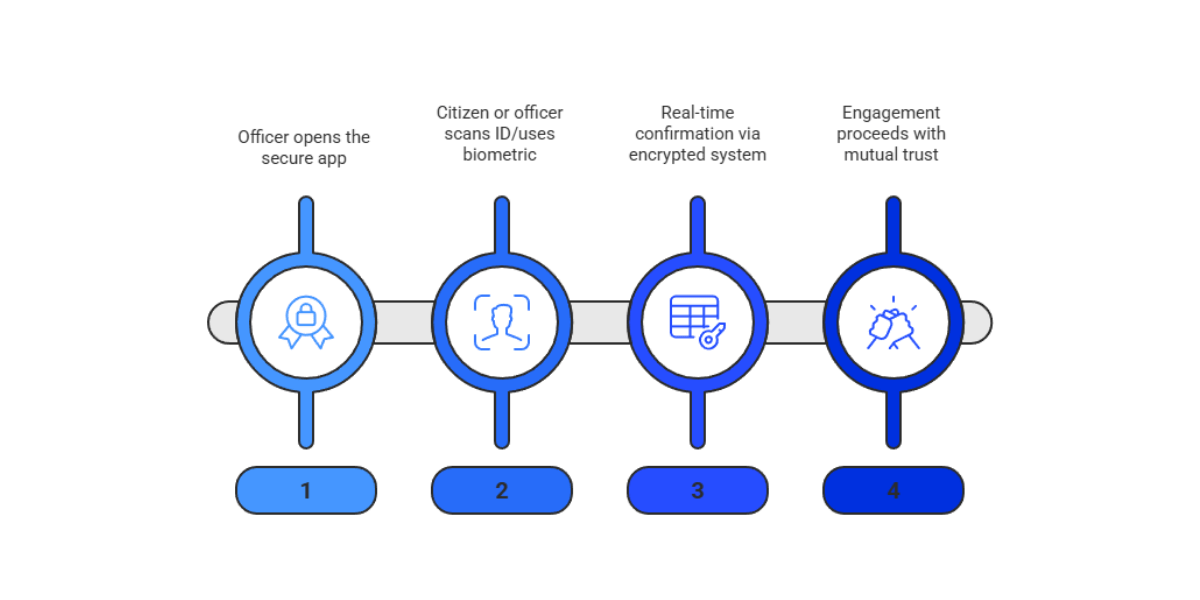
Identity verification provides the answer. By validating both parties at the start of any encounter, agencies remove uncertainty, reduce risk, and establish a foundation of trust. For officers, verification safeguards against impersonation and reinforces professional credibility. For citizens, it creates confidence that they are interacting with legitimate authorities who respect their privacy and safety. As more agencies turn to digital tools such as Guardian4D’s Guardian911, identity verification is no longer optional—it is central to modern community policing.
Why Identity Verification Protects Both Parties
Verification protects both citizens and officers by ensuring that every interaction begins with authenticity. Officers in the field face increasing challenges: impersonators posing as law enforcement, misinformation spreading online, and citizens who hesitate to engage out of fear or skepticism. Citizens, for their part, worry about safety in sensitive situations, from traffic stops at night to opening the door for an unexpected knock.
Confidence for Citizens
When verification is integrated into every interaction, both sides gain confidence. Citizens know that the badge shown to them is tied to a secure record, not a counterfeit. This mutual assurance is even more critical in mobile contexts—whether over the phone, through a video call, or during a shelter-in-place alert.
Security for Officers
Officers know that the person they are speaking with has been authenticated, reducing the risk of false reports or intentional misrepresentation. The process itself validates their role, reducing stress and potential confrontation.
A Foundation for De-escalation
Identity validation is also preventive. It reduces escalation by removing doubt at the outset. Instead of beginning with suspicion, interactions begin with confirmation, allowing conversations to focus on the issue at hand.
Beyond individual encounters, verified identity also strengthens organizational credibility. When agencies adopt clear, consistent verification practices, citizens begin to associate the entire department with professionalism and accountability. Officers benefit as well, since they no longer need to rely on personal authority alone to secure cooperation. Instead, the process itself validates their role, reducing stress and potential confrontation. This dynamic is especially important in diverse communities where past mistrust may influence present interactions. By embedding verification into daily practice, agencies create a system that speaks louder than words.
This principle applies equally in digital and physical spaces, whether an officer is knocking on a door, making a traffic stop, or engaging with a citizen reporting an emergency.
Beyond immediate safety, verified identity also reduces the long-term stress that officers and citizens experience in uncertain encounters. When both sides know that a secure system is confirming credentials in real time, they are less likely to approach the situation defensively. This creates room for clearer communication, better decision-making under pressure, and fewer misunderstandings that might otherwise escalate into conflict.
Tools That Enable Safe Encounters
The shift toward secure officer–citizen interactions is powered by tools designed for efficiency, transparency, and confidentiality. Guardian911, the mobile application designed for officers, is a cornerstone of this transformation. While citizens interact with its counterpart, Bridge911, Guardian911 ensures that officers maintain verified, encrypted, and streamlined communications.
Key tools include:
Beacon Verification
Officers can be instantly validated through encrypted signals, allowing citizens to confirm legitimacy in seconds without relying solely on visual identification.
This method reduces hesitation in high-pressure environments. Citizens do not need to interpret body language or analyze uniforms—they receive digital proof immediately, which minimizes doubt and accelerates cooperation.
Manual Verification
When technology signals are limited, manual options ensure that both parties can still establish identity quickly.
Manual steps serve as a backup that maintains trust when signals are weak. Rather than leaving citizens uncertain, officers have a fallback process that ensures continuity and reliability in all settings, including remote or rural areas.
Verification Tools
Identity verification today is focused on secure, reliable methods that strengthen officer–citizen interactions. These tools provide agencies with a clear record of engagement, supporting accountability, oversight, and training without adding complexity for the user.
Encrypted Communication Channels
Whether over the phone or during video calls, encryption guarantees that conversations remain private, secure, and resistant to tampering.
Encryption not only protects sensitive details but also signals to citizens that their privacy is valued. Knowing that a conversation cannot be intercepted encourages more open and honest communication.
Configurable Workflows and Dashboards
Supervisors and command centers can track interactions in real time, ensuring that verification protocols are consistently followed.
Workflows can be tailored to reflect agency policy or legal requirements, which ensures compliance while making verification an integrated step rather than an added burden.
Incident Storyboard
This feature provides a transparent, step-by-step timeline of interactions, drawing from multiple perspectives to support accountability and training.
By showing a clear record of events, storyboards reduce disputes and misunderstandings. They also provide valuable teaching material for preparing officers to handle complex scenarios with greater confidence.
For officers, these tools simplify complex encounters and reduce stress. For citizens, they create reassurance that their safety is being prioritized at every stage.
These tools also encourage consistency across jurisdictions. Whether an agency operates in a large metropolitan area or a smaller rural community, the same verification standards can apply. This consistency helps citizens develop habits of trust and recognition—once they learn how verification works in one context, they can expect the same safeguards everywhere, strengthening overall public confidence in law enforcement.
Preventing Impersonation and Misinformation
Impersonation has become a pressing concern in public safety. Individuals pretending to be officers can exploit fear, gain access to private spaces, or spread false information. At the same time, misinformation circulates quickly online, leaving citizens unsure about which sources to trust. Both trends weaken community trust and complicate the work of legitimate law enforcement.
Directly Addressing Risks
Identity verification directly addresses these risks. By validating officer credentials through secure digital systems, agencies prevent impersonators from gaining credibility. Citizens no longer need to rely on intuition or incomplete signals, such as uniforms or vehicles, which can be replicated. Instead, they can check identity through trusted mobile channels.
Misinformation is also contained when communication flows through verified apps. Shelter-in-place orders, active shooter updates, or emergency alerts carry far more weight when citizens know they are authenticated. By contrast, rumors on social media can spread confusion and create dangerous delays. Agencies that anchor communication in verified identity systems create a single source of truth, reducing the noise that undermines safety.
The benefits extend beyond immediate incidents. Over time, verified communication channels reshape how communities consume information during crises. Instead of scanning multiple unverified sources, citizens learn to rely on a single trusted system. This behavioral shift reduces anxiety and prevents dangerous overreactions. For officers, it means clearer situational awareness and fewer distractions caused by false reports. The result is a community better prepared to respond calmly and effectively to genuine threats.
Another benefit is improved collaboration with other emergency services. Verified information shared through secure systems can be trusted by fire departments, medical responders, and local government offices without lengthy checks. This reduces duplication of effort and ensures that all critical responders operate from the same reliable information, which can be crucial in time-sensitive emergencies.
How Verification Enhances Trust in Mobile Apps
Mobile apps have become essential in bridging the gap between agencies and citizens. Yet the effectiveness of any app depends on trust. If citizens worry that an app could be spoofed, or that messages could come from an unverified source, adoption rates plummet. Similarly, officers must trust that mobile communication tools safeguard their professionalism and security.
Identity verification solves these challenges. When citizens know that a message comes directly from an authenticated officer, skepticism fades. When officers use Guardian911, they are protected from impersonation and shielded by encrypted channels that keep sensitive information safe. Trust grows not simply because of the information exchanged, but because of the certainty that both parties are who they claim to be.
Verification also enhances usability. Citizens are more willing to engage through apps when they do not have to question legitimacy. They will respond faster to alerts, follow shelter-in-place orders without hesitation, and feel comfortable reporting sensitive incidents. Officers, in turn, gain more accurate information and faster cooperation, making their jobs safer and more effective.
Verified mobile systems also support ongoing training and evaluation. Agencies can analyze how citizens respond to authenticated alerts, how quickly instructions are followed, and where communication barriers remain. These insights allow continuous improvement, helping agencies refine their outreach and strengthen their relationships with the communities they serve.
Use Cases: Traffic Stops, Protests, and Checkpoints
Identity verification is not theoretical—it plays a decisive role in real-world encounters.
Traffic Stops
During a nighttime stop, citizens often feel vulnerable. Verification tools allow them to confirm an officer’s identity before lowering anxiety, leading to smoother interactions and safer outcomes.
Protests and Public Demonstrations
Large gatherings are complex environments where misinformation spreads quickly. Verification ensures that citizens know which officers are legitimate and which instructions are authoritative, reducing tension and confusion.
Checkpoints
At border crossings or security checkpoints, verification creates efficiency. Officers can validate their presence while citizens trust that procedures are official and consistent.
Door-to-Door Communication
Whether delivering evacuation notices or conducting welfare checks, officers can establish identity immediately, increasing the likelihood of cooperation at the doorstep.
For vulnerable populations such as seniors or those living alone, an unverified knock can feel intimidating. Digital confirmation reassures residents before they open the door, which not only increases cooperation but also fosters goodwill toward the agency.
Over-the-Phone Engagements
When officers contact citizens by phone, verification within the app reassures both sides that the call is genuine, preventing impersonation and reinforcing trust.
Phone scams remain a common threat. By embedding verification into official calls, agencies protect citizens from fraud while also strengthening confidence in legitimate outreach. This dual protection makes telephone communication viable again for critical updates.
Active Shooter Situations
In moments of crisis, such as an active shooter threat, speed and clarity are vital. Verified alerts prevent confusion, guide citizens toward safety, and ensure that critical instructions are followed.
In chaotic moments, even a short delay in verification can cost lives. By receiving authenticated alerts, citizens know exactly what steps to take—whether to avoid certain areas, seek shelter, or follow evacuation routes. Officers also benefit, since consistent messaging reduces conflicting instructions on the ground.
Shelter-in-Place Orders
Verification guarantees that such alerts are authentic, allowing citizens to respond decisively without second-guessing. Trust in the source translates into faster compliance and greater safety.
During severe weather or public safety threats, hesitation can endanger entire families. Verified alerts remove doubt and speed up compliance. When citizens trust the instruction, they act decisively, improving collective safety.
Each of these scenarios demonstrates that verification is not a luxury. It is a necessary safeguard that makes high-stakes encounters safer and less stressful for everyone involved.
Conclusion
Identity verification is the cornerstone of safe officer–citizen interactions. It protects both sides, prevents impersonation, and ensures that mobile apps function as trusted channels of communication. From traffic stops to shelter-in-place orders, from phone calls to active shooter updates, verification consistently transforms uncertainty into confidence.
For agencies, the benefits extend beyond operational efficiency. Verified interactions build long-term community trust, reinforce professionalism, and demonstrate accountability. For citizens, verification ensures that every encounter—whether digital or in person—respects their safety, privacy, and dignity.
Connect with Confidence
Guardian4D equips public safety agencies with secure, innovative technology that makes every interaction safer, more transparent, and more trusted. From verified identity to encrypted communication, our solutions are designed to help officers and citizens connect with confidence.
Ultimately, the goal of identity verification is not only to prevent crime or reduce risks but to reshape expectations around law enforcement communication. When people grow accustomed to verified interactions, they begin to expect transparency and professionalism as the norm. This cultural shift benefits everyone: citizens feel safer, officers are more effective, and agencies establish a reputation for credibility that endures beyond individual encounters.